Choosing the right Celebrant for you
If you are looking for a Dorset wedding celebrant, knowing how to choose the right person can make all the difference to your day. Your ceremony sets the tone for everything that follows. So finding someone who understands your story, your style, and your vision is essential. You need someone who will write the right ceremony for you that will also engage your guests.
Your celebrant shouldn’t just stand at the front – they should shape how your ceremony feels, how it flows, and how your story is told.
As a celebrant working with couples across Dorset, Hampshire, Southern England, and internationally, I see firsthand how much difference the right celebrant makes. When a ceremony is done well, it doesn’t just feel organised – it feels natural, relaxed, and completely personal to you.
Here is how to choose someone who will create something truly personal, meaningful, and seamless.
The setting may be pure Dorset – clifftop views, a country house, a sailcloth marquee, or a quiet garden by the sea – but what guests remember most is how your ceremony felt. Choosing the right Dorset wedding celebrant is about choosing the person who will shape the heart of your day.
For many couples, that is the point at which the planning becomes more personal. The flowers, food, and music all matter, of course, but the ceremony is where your story is actually told. It sets the tone, gives the day meaning, and creates the moment everyone gathers for. A celebrant-led wedding offers enormous freedom, but that freedom works best when it is guided by experience, care, and a calm pair of hands.
What a Dorset wedding celebrant really brings to your day
A good celebrant will write and deliver a ceremony built around you. That sounds simple, but in practice, it means far more than swapping out a standard script for a few personal details. A skilled celebrant takes time to understand your relationship, your family dynamic, the atmosphere you want to create, and the moments that matter most to you.
That might mean a ceremony that feels elegant and romantic, or one that is light-hearted and full of laughter. It may include cultural traditions, spiritual elements, family involvement, readings, symbolic rituals, or personal vows. For some couples, the priority is warmth and intimacy. Others, it is structure, poise, and confidence in front of a large gathering. Often, it is a blend of both.
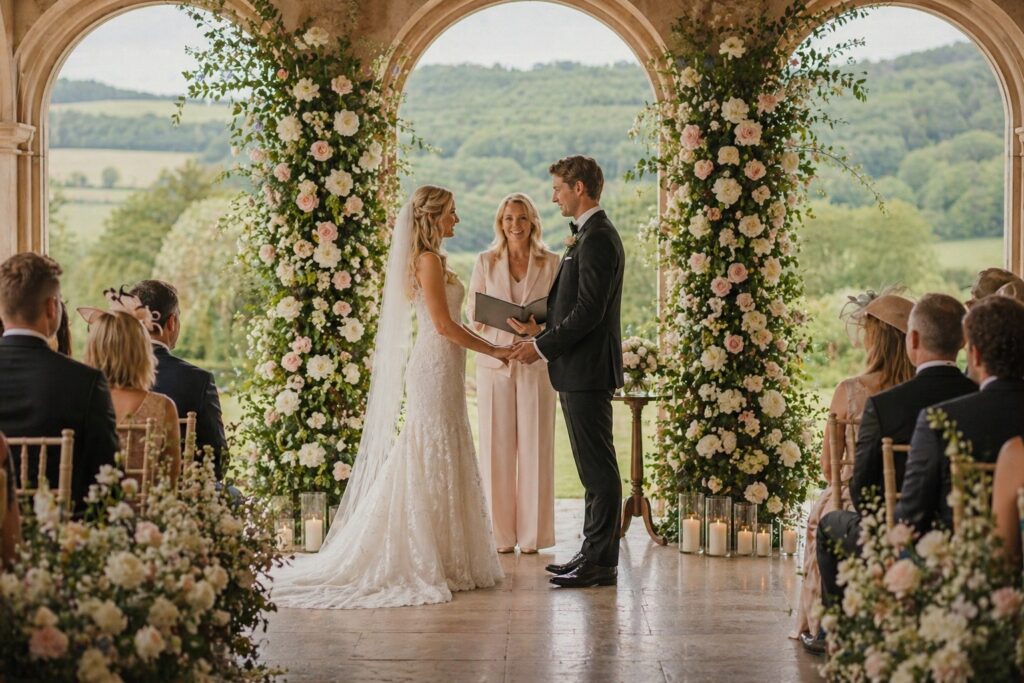
In Dorset, where venues range from coastal spaces to formal estates and relaxed rural settings, the ceremony can be shaped to fit the backdrop beautifully. A skilled, experienced celebrant does not impose a style. They create one with you.
Why couples choose a celebrant instead of a standard ceremony
The biggest difference is personalisation. A celebrant-led ceremony is not restricted to a fixed format, which gives you room to create something far more reflective of your values and personalities.
That matters particularly for couples who do not feel represented by a purely legal script, or who want to include children, stepfamilies, or loved ones in meaningful ways. It also matters for multicultural weddings, where it can be important to honour more than one background or belief system with care and respect.
There is also a practical side. With the right celebrant, you are not just receiving a written ceremony. You are gaining guidance on pacing, wording, guest experience, and delivery. That support can make all the difference if you want the ceremony to feel relaxed and natural rather than over-rehearsed or uncertain.
The trade-off is worth understanding. In England, celebrant-led weddings are not usually the legal part of the marriage, so many couples complete the legal registration separately. For most, this is a small administrative step in exchange for a ceremony that feels completely their own. If your priority is experience over bureaucracy, it is often the best of both worlds.
What to look for in a Dorset wedding celebrant
The first thing is connection. You should feel at ease with the person you choose. This is someone you may share personal stories with, discuss family relationships with, and rely on during a highly emotional moment. Professionalism matters enormously, but warmth matters too.
Beyond that, look for someone who can listen well and shape ideas into something polished. Not every couple starts with a clear vision. Some know exactly what they want. Others only know what they do not want. An experienced celebrant can work confidently with either.
Voice and presence are just as important as writing ability. A beautifully written ceremony still needs to be delivered with sensitivity, pace, and calm authority. In a windswept outdoor setting or a full room of guests, that presence matters. You want someone who can hold attention without making the ceremony about themselves.
It is also wise to consider wider experience. If your celebrant understands weddings from a broader event perspective, they can support the flow of the day in a way that goes beyond the script. This is especially valuable when timings shift, nerves appear, or several moving parts need gentle coordination.
Questions worth asking before you book
You do not need an interview checklist as long as your arm, but a few thoughtful questions can tell you a great deal. Ask how the ceremony is created, and how much input you will have. What will the process feel like from the first conversation to the wedding day?
How do they handle changes, nerves, and unexpected moments? Ask whether they have experience with the sort of ceremony you are planning. Specify whether that is a destination-style celebration in Dorset, a blended family wedding, or a ceremony with faith-informed or cultural elements.
And pay attention to how they answer. Reassurance, clarity, and calm are often as telling as the details themselves.
Matching The Ceremony To Your Dorset Venue
One of the joys of Dorset is variety. A dramatic coastal venue calls for a different energy from a stately home or countryside barn. The best ceremonies feel at home in their surroundings.
Many couples are marrying outdoors; your celebrant should consider sound, weather, movement, and guest comfort. When your venue is formal, the wording and structure may be more refined. If it is relaxed and family-focused, the tone may be softer and more conversational. None of this changes the substance of your promises, but it does shape how the moment lands.
A local Dorset Wedding Celebrant brings valuable local knowledge and understanding.
- Knowing how Dorset venues operate
- How outdoor ceremonies work in practice
- What timing suits coastal and countryside settings can make planning effortless.
It means the ceremony is not only personal in content but thoughtful in execution.
Personalised Wedding Ceremonies Without Losing Structure
Many couples want a ceremony that feels unique, but they do not want it to become rambling or self-conscious. That is where professional writing and experienced ceremony leadership matter most.
- A strong celebrant knows how to weave in personality without overcrowding the moment. * *
- They know when to bring humour in, when to let a sentence breathe, and when simplicity says more than elaborate wording ever could.
- They can include touching detail without tipping into awkwardness or sentimentality.
This balance is particularly important when family relationships are complex. You may want to honour children, parents, absent loved ones, or different traditions, but not every element needs equal weight. The right celebrant helps you make thoughtful decisions so that the ceremony remains coherent, elegant, and emotionally true.
The role of confidence and calm on the day
I find even the most organised couples often feel a little overwhelmed once the day arrives. That is entirely normal. A celebrant should not add to that pressure. They should reduce it.
- That might mean guiding you through where to stand
- Reminding readers when they are needed
- Adjusting pace if emotions rise
- Helping guests settle into the moment.
- Quiet leadership often goes unnoticed because it simply makes everything feel easier.
This is one reason many couples appreciate working with someone who also understands event hosting and ceremony flow more broadly. The ceremony does not happen in isolation. It sits within a larger day, and confidence at that centre point can ripple outwards.
Choosing someone who feels right for you
Style matters.
- Some celebrants are highly theatrical.
- Others are deeply understated.
- Some lean strongly into humour,
- While others create a more classical and composed atmosphere.
Neither is automatically better. It depends on you, your guests, and the kind of memory you want to create.
- When you are planning a wedding or vow renewal that is polished, heartfelt, and inclusive, you may want someone who can blend warmth with authority.
- If your guest list includes different cultures, generations, or expectations, sensitivity and adaptability become even more important.
The best celebrant for your wedding is the one who can hold all of that with confidence.
Rosie Anstey’s approach, for example, is centred on bespoke ceremony design with the kind of calm professionalism that helps couples feel both looked after and truly seen. That combination is often exactly what turns a lovely ceremony into one people speak about for years.
A Dorset wedding celebrant should give you more than words for a ceremony. They should give you confidence that this part of your wedding will feel meaningful, beautifully handled, and unmistakably yours. When that happens, the ceremony is no longer just the formal beginning of the day. It becomes the moment everything else grows from.
If you are choosing carefully, trust the person who makes you feel both excited and reassured – because on a day that moves quickly, that feeling is worth a great deal.
Are you ready to start planning?
Your ceremony should feel like the heart of your day. Contact me if you are looking for a Dorset wedding celebrant who will take the time to get to know you and understand your story. If you’re looking for a ceremony that is written just for you, meaningful, and memorable, I’d love to hear from you.