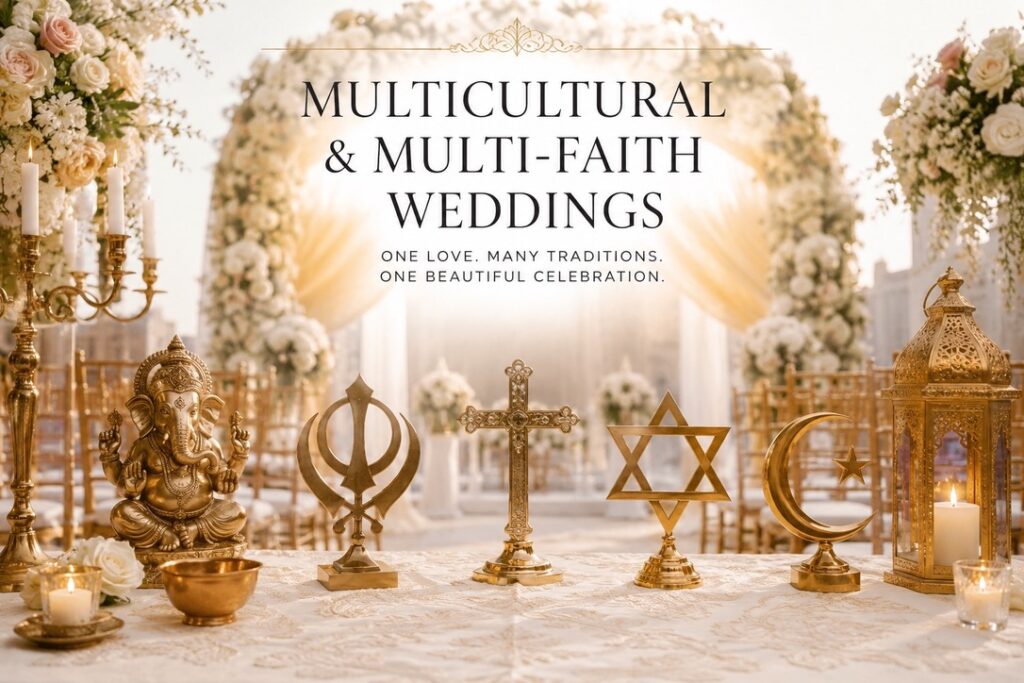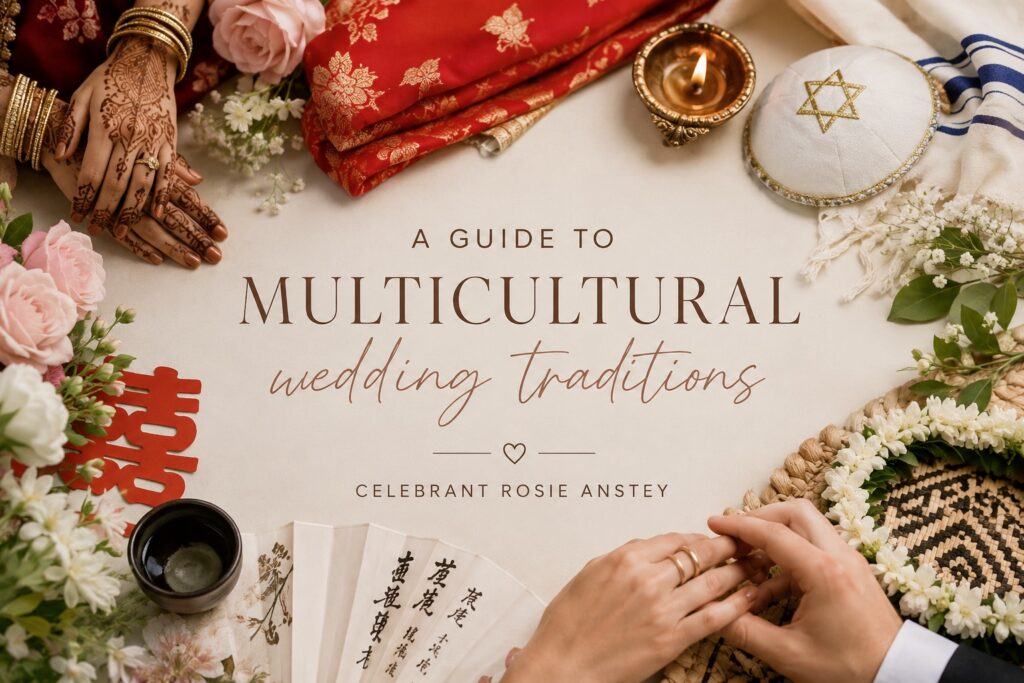
When two families bring different cultures, faiths, or national backgrounds to one wedding, the question is rarely whether to include tradition. It is usually which traditions matter most, how they fit together, and how to make the day feel personal rather than performative.
This guide to multicultural wedding traditions is designed to help you make those choices with confidence, warmth, and clarity.
A multicultural wedding can be one of the most joyful kinds of celebrations to plan. It can also bring a little pressure. Couples often want to honour parents and grandparents, respect religious or cultural expectations, and still create a ceremony that feels like their relationship rather than a patchwork of obligations. The good news is that these aims are not in conflict. With thoughtful planning, your wedding can hold depth, beauty, and ease at the same time.
What a guide to multicultural wedding traditions should really help you do
The most useful starting point is not a list of customs from around the world. It is a conversation about meaning. A ritual may look beautiful, but if you do not understand why it matters, it is much harder to include it well.
Begin by asking each other a few simple questions, and then decide which traditions feel emotionally important
- Which ones would upset family members if they were left out?
- Which customs genuinely reflect your values?
- Are they only being suggested because they are expected?
There is no single right answer. For one couple, a tea ceremony, a chuppah, or a handfasting may be central. For another, the key element may be bilingual vows, a blessing from an elder, or music that instantly makes both families feel at home.
This is where many couples feel relieved. You do not need to represent every part of your heritage equally in every moment. Balance does not always mean fifty-fifty. Sometimes one tradition is better suited to the ceremony, while another belongs more naturally at the reception, in the food, the attire, or the speeches.
Start with values before logistics
Before timings, suppliers, or order of service, focus on what you want guests to feel. Do you want the ceremony to feel reverent, joyful, intimate, formal, relaxed, or family-led? That emotional tone will shape your choices.
If one partner comes from a culture where weddings are deeply communal and expressive, and the other imagines something quieter and more private, neither vision is wrong. It simply means you need to design with intention. You might choose a calm, heartfelt ceremony followed by a lively celebration, or a formal structure that includes one or two vibrant symbolic moments. The shape of the day matters as much as the traditions themselves.
It also helps to separate legal, religious, and personal elements. In some cases, couples choose to complete the legal paperwork separately and then create a bespoke ceremony that allows more freedom. This can be especially helpful when blending faiths, languages, or family expectations across different countries.
Choosing which traditions to include
Not every meaningful tradition needs to happen in front of all your guests. That is worth remembering, particularly if you are worried the ceremony might become too long or feel unfamiliar to part of the room.
Some customs are beautiful, such as private or smaller family moments before the main ceremony. Others work best when shared publicly because they bring everyone into the story. A ring warming, for example, invites participation. Sometimes, a family blessing can create a strong sense of unity. A ritual involving fire, crowns, cloth, wine, garlands, or ribbons may be visually striking and easy for guests to follow if it is introduced properly.
The key is context. If you are including a ritual from one or both backgrounds, explain it clearly and briefly. Guests do not need a lecture. They do need enough understanding to appreciate what they are witnessing. A well-worded introduction can transform a moment from confusing to deeply moving.
It is also wise to think about pace. A ceremony with too many separate elements can lose its emotional flow. Usually, two or three carefully chosen traditions, woven into a strong ceremony structure, feel more powerful than trying to include everything.
Handling family expectations with kindness and boundaries
Family is often at the heart of multicultural weddings, and that is part of what makes them so special. It can also be the trickiest part. Parents or grandparents may feel protective of traditions because they represent identity, memory, and belonging, not just wedding styling.
That does not mean every request must be accommodated. It does mean the conversation deserves care. If a family member asks for a specific custom, ask what it signifies to them. Their answer may reveal a deeper need: respect, visibility, continuity, faith, or the desire not to feel sidelined. Once you understand that, there may be more than one way to honour it.
For example, if a full ritual does not fit your ceremony, you may be able to acknowledge that heritage in a reading, a blessing, a piece of music, traditional dress, or a role for a relative. Sometimes families respond well when they can see that their culture is not being ignored, just expressed in a different form.
A calm professional guiding the ceremony can make a real difference here. When expectations are delicate, having someone who can explain the structure, hold the tone, and make each inclusion feel natural often takes pressure off the couple.
Language, translation, and making everyone feel included
Language is one of the most powerful ways to welcome people into a ceremony. Even a small amount of bilingual content can have an enormous emotional impact. A greeting in both languages, a short reading, or a few lines of vows spoken in each other’s mother tongue can make families feel seen and valued.
The practical point is clarity. If your ceremony includes more than one language, think carefully about how guests will follow along. Sometimes, a full translation is needed. Sometimes a brief explanation in the order of service or a spoken introduction is enough. It depends on your guest list and the length of each section.
Pronunciation matters too. Names, places, and key phrases should be spoken with care. Taking time to get these details right is not minor. It is a mark of respect, and guests notice.
Ceremony design: blending, not bolting on
The most memorable multicultural ceremonies do not feel like one wedding with another wedding attached to it. They feel coherent from beginning to end.
That usually comes from thoughtful transitions. If you are moving from a Western-style entrance into a symbolic cultural ritual, or from personal vows into a religious blessing, the wording around those moments matters. Done well, each part supports the next, and the ceremony feels elegant and purposeful.
Music can help create this unity, as can the choice of readings and the overall narrative. Rather than presenting traditions as separate items on a programme, it is often more moving to frame them around shared themes: family, welcome, commitment, home, faith, celebration, or joining two lineages.
This is especially valuable in destination weddings, where guests may already be outside their usual frame of reference. In places such as Cyprus, where international weddings often bring together families from very different backgrounds, a well-led ceremony helps everyone relax into the experience and understand their part in it.
Practical details couples often overlook
Even the loveliest symbolic moment needs practical support. If your ceremony includes candles, cloths, crowns, food, shared cups, garlands, or family participation, rehearse the mechanics as well as the meaning.
Think about who holds items, where people stand, whether older relatives need chairs, how long transitions take, and what happens if the weather affects the plan. Outdoor weddings in particular need extra thought. Wind, heat, and uneven ground can all change how a ritual works in practice.
Attire matters too. Some traditions require movement, head coverings, shoe removal, or specific garments. Make sure these elements are comfortable and compatible with the setting. If one outfit change or ceremonial accessory is deeply important, build enough time around it so it does not feel rushed.
The same applies to photography and videography. If there are sacred or sensitive moments, brief your suppliers in advance so nothing disrupts the ritual’s significance.
Let the wedding reflect your actual relationship
The strongest multicultural weddings are not built to impress. They are built to ring true. That may mean a ceremony with heritage at its core, or one that includes just a few carefully chosen traditions alongside contemporary vows and modern styling.
There is no prize for complexity. If a custom does not resonate, it is perfectly acceptable to leave it out. Equally, if one meaningful ritual carries more emotional weight than ten decorative touches, trust that instinct.
Your guests will remember how the ceremony felt. They will remember whether it was generous, sincere, and unmistakably yours. When cultural traditions are understood rather than treated as obligations, they do more than honour the past. They help everyone present witness the beginning of a marriage in a way that feels grounded, generous, and full of heart.
If you are planning a wedding that brings together different backgrounds, permit yourselves to ask good questions, take your time, and choose meaning over performance. The most beautiful ceremonies are not the ones that include everything. They are the ones where every element belongs.
Planning a multicultural wedding?
Let’s create a ceremony that beautifully reflects your love story, traditions, and heritage. Get in touch with Celebrant Rosie Anstey to start designing your perfect celebration. I look forward to hearing from you soon. Rosie
Useful Links
Luxury Wedding Toastmaster & Master of Ceremonies