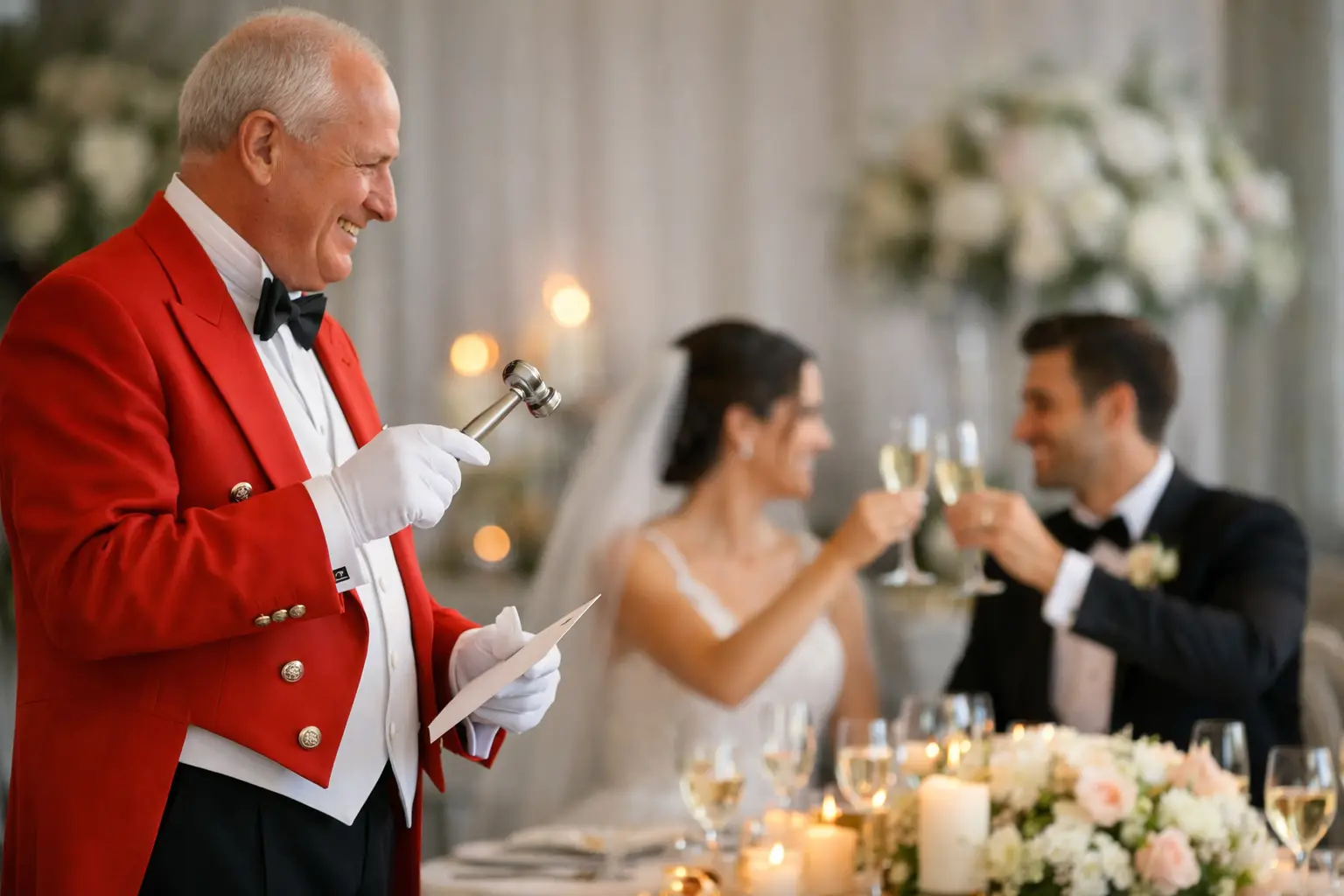
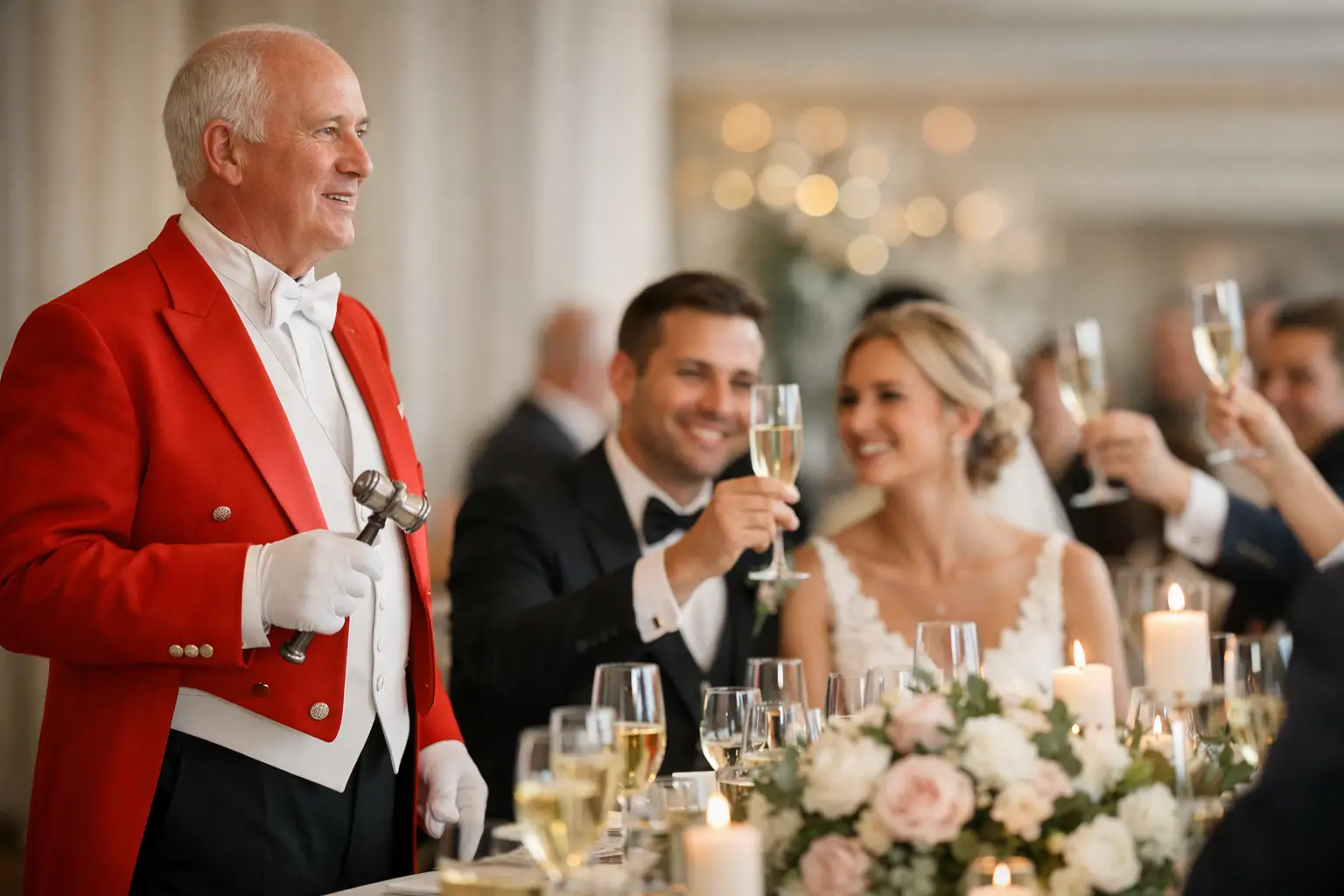
Your ceremony has ended, the confetti has settled, and your guests are ready to celebrate. But who makes sure everyone knows where to go, when dinner begins, how the speeches flow and when the evening party truly starts? The wedding emcee vs toastmaster differences can seem small at first, yet choosing the right person can shape how relaxed, polished and enjoyable your whole day feels.
Both roles bring order to a wedding reception, and both can offer reassuring leadership when you would rather be enjoying your newlywed moments than answering questions about the cake cut. Their styles, traditions and responsibilities are not always the same, however. Understanding the distinction helps you choose support that suits your venue, guest list and vision for the day.
Wedding emcee vs toastmaster differences at a glance
A Toastmaster is traditionally associated with formality, etiquette and ceremonial occasion. You may picture the familiar red tailcoat, although attire varies and is often agreed to suit the wedding. A professional Toastmaster takes a visible, authoritative role in managing the reception, making formal announcements, guiding the wedding party and helping traditional elements happen at the appropriate time.
A wedding emcee, or Master of Ceremonies, is generally more focused on hosting. They introduce speakers, create warmth and energy in the room, make announcements and connect one part of the celebration to the next. Their presentation can be polished and elegant, lively and humorous, or quiet and understated. The best approach depends on the couple and the atmosphere they want to create.
There is considerable overlap. In fact, many experienced professionals are comfortable working as both a Toastmaster and an emcee. The title alone is less useful than a clear conversation about what you need them to do, how formal you want the day to feel and how present you would like them to be in front of your guests.
What a traditional Toastmaster brings to your wedding
A Toastmaster is a calm point of authority. Before the reception begins, they will usually liaise with the venue, caterers, photographer, musicians and key members of the wedding party. They learn the running order, check names and timings, understand any family sensitivities, and make sure those with a role in the day know where they need to be.
During the celebration, they may receive guests, announce the wedding breakfast, organise the receiving line where one is planned, introduce speeches, arrange formal photographs and coordinate the cutting of the cake. They also handle the small moments that guests may never notice: finding a missing speaker, gently drawing people back to their seats or adjusting the schedule when a course takes longer than expected.
This is particularly valuable for a larger wedding, a traditional venue or a celebration with several generations of family present. A Toastmaster can make formality feel welcoming rather than stiff, provided their manner fits the couple. Their confidence means relatives do not have to become unpaid event managers for the day.
The potential trade-off is style. If you are planning a very informal, festival-inspired celebration or a relaxed destination wedding with a loose timeline, a highly traditional approach may feel more structured than you want. That does not mean a Toastmaster is unsuitable. It simply means the brief should be tailored, with only the elements that serve your celebration retained.
A Toastmaster is often a lovely fit when…
You want clear formal announcements, a well-managed wedding breakfast and someone confident in traditional etiquette. It can also be the right choice where family expectations are important, where there are many guests, or where the couple would like a composed professional to manage the room without relying on venue staff to oversee every detail.
What a wedding emcee brings to your celebration
An emcee is the voice that gives the reception its rhythm. They welcome guests, explain what is happening next, introduce each speaker with care and maintain a natural sense of momentum. While they can certainly work to a detailed schedule, their role often feels more conversational than ceremonial.
A good wedding emcee reads the room. They know when a short announcement is enough, when guests need clear direction and when it is best to allow a meaningful moment to breathe. They can make multilingual or multicultural celebrations easier to follow, sensitively acknowledging traditions and helping guests understand why particular rituals matter.
The role is especially helpful when speeches are central to the day. An emcee can set the tone for each person, ensure correct pronunciation of names, keep introductions gracious rather than overlong and support speakers who may be nervous. They can also manage practical transitions, such as inviting guests outside for sparklers or encouraging everyone towards the dance floor, without turning the occasion into a performance about them.
The trade-off is that an emcee is not automatically an etiquette specialist or full event co-ordinator. Some emcees are brilliant presenters but do not take responsibility for supplier liaison, formal processions or a detailed operational schedule. If those tasks matter to you, ask specifically whether they are included rather than assuming the title covers them.
An emcee may suit you best when…
You would like a warm, personable host who reflects your humour and personality, keeps speeches moving and gives the celebration an easy-going flow. It works beautifully for contemporary weddings, intimate gatherings and celebrations that blend cultures, languages or family traditions in a more relaxed format.
The questions that matter more than the job title
Whether someone calls themselves a Toastmaster, wedding emcee or Master of Ceremonies, experience and preparation are what make the difference. Ask how they will build your running order, who they will speak to before the day and how they handle a delay. A thoughtful professional will not promise that a wedding will run to the minute, because real celebrations have their own pace. They will have a plan for keeping things calm when plans change.
It is also worth discussing their style in detail. Would you like formal introductions, gentle humour, high energy or a barely visible guiding hand? Do you want them to announce every transition, or simply step in when guests need direction? The right host should sound like an extension of your day, never a distraction from it.
Consider your venue too. Some co-ordinators manage timing exceptionally well, while others focus primarily on food and service. A professional host can bridge the gap between suppliers, guests and the wedding party, particularly when the venue is unfamiliar with your traditions or when your plans involve several locations. For a Cyprus wedding or another destination celebration, this calm oversight can be especially reassuring when guests are navigating a new setting and schedule.
Could one person be your celebrant and reception host?
For some couples, having the same trusted professional lead the ceremony and guide the reception offers a lovely sense of continuity. They already know your story, your important people, the meaning behind your choices and any details that need particular sensitivity. The welcome after the ceremony can therefore feel natural and personal, rather than handed over to someone meeting your guests for the first time.
There are practical considerations. Your celebrant needs appropriate time between the ceremony and reception duties, especially if they are greeting guests, travelling between spaces or changing attire. It also helps to agree exactly when their responsibility begins and ends, so a venue manager, wedding planner or trusted member of the wedding party remains available for practical decisions.
For couples who value a personal ceremony and confident leadership throughout the day, this combined approach can offer both emotional continuity and clear organisation. The key is thoughtful planning, not trying to fill every minute with announcements.
Choose the feeling you want guests to remember
Your guests are unlikely to remember whether the person with the microphone was introduced as an emcee or a Toastmaster. They will remember feeling welcomed, knowing where they needed to be and enjoying the speeches without awkward pauses or confusion. Most of all, they will remember that you looked present, unhurried and completely at ease.
Choose the professional whose style feels right for your celebration, then give them the space and information to lead with confidence. When the structure is handled with care, you are free to savour the laughter, the happy tears and the people who have gathered to celebrate your story.