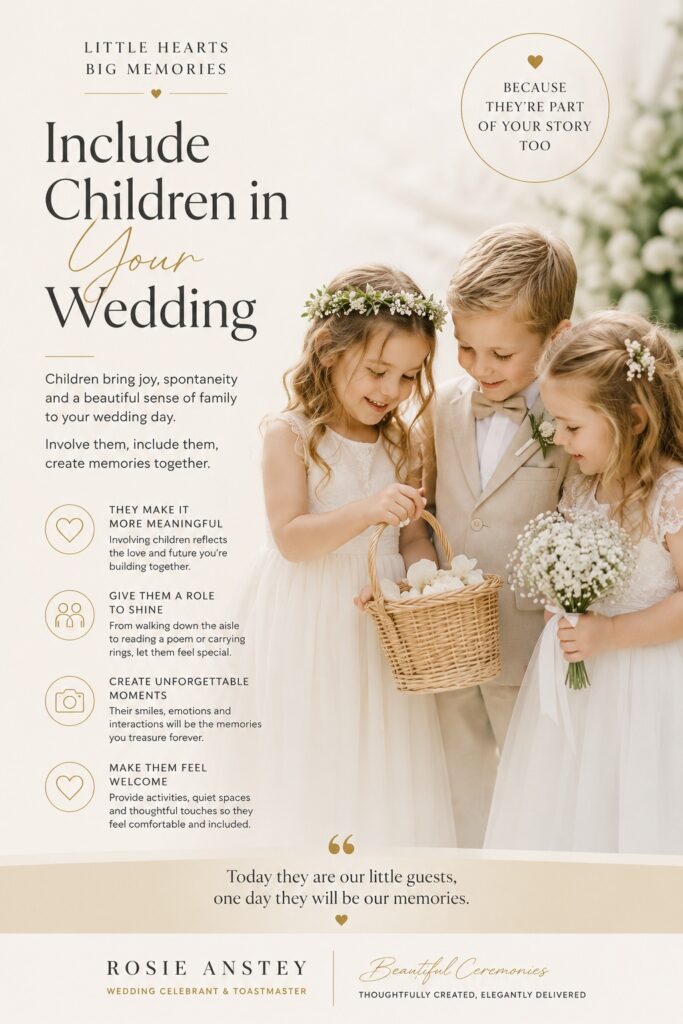
A child’s delighted wave from the front row, a carefully practised reading, or a tiny hand placed in yours can become one of the most moving moments of a wedding day. Knowing how to include children in weddings is less about giving them a costume and a task and more about making them feel genuinely part of the promise you are making as a family.
Whether they are your own children, nieces and nephews, godchildren or the children of close friends, their involvement can bring warmth, humour and real meaning to a ceremony. The best approach is one that suits their age, personality, and confidence, while leaving plenty of room for the reality that children may be shy, excitable, tired, or simply more interested in the cake.
Begin with what involvement means to your family
Before choosing roles, consider why you would like children to be included. For some couples, it is about recognising the children who have helped shape their lives together. For others, it is a way to honour several generations of one family, especially at a destination wedding where loved ones have travelled a long way to celebrate.
There is no requirement for every child to walk down the aisle or speak in front of guests. A meaningful role can be quiet and private. They might help choose a piece of music, place a flower on a remembrance table, sign a commemorative certificate, or be mentioned by name within the ceremony. These moments often feel more authentic than asking a reluctant child to perform.
It also helps to talk openly with parents. They know whether their child will relish a moment in the spotlight or find it overwhelming. Their insight can prevent a well-meant plan from becoming a source of pressure on the day.
Choose roles that suit the child, not the photograph
Traditional flower children and page boys remain lovely choices, but they are far from the only options. Older children may enjoy a role with more responsibility, while younger ones usually fare best with something simple, short and supported by an adult they know.
For children who would like to take an active part, consider these possibilities:
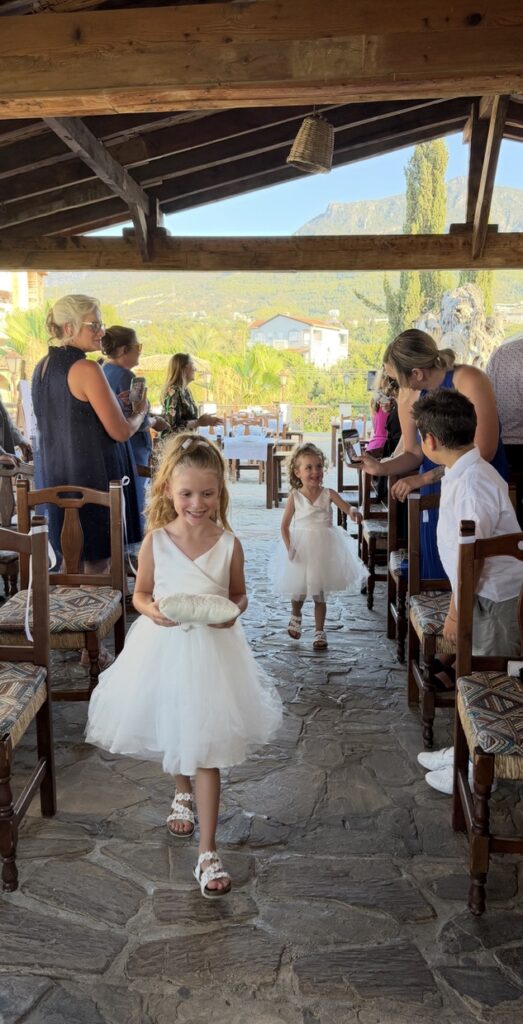
- scattering petals, carrying a small sign, or walking alongside the wedding party
- handing over rings, with an adult keeping them safely secured until the moment arrives
- reading a short poem, sharing a favourite memory, or introducing a song
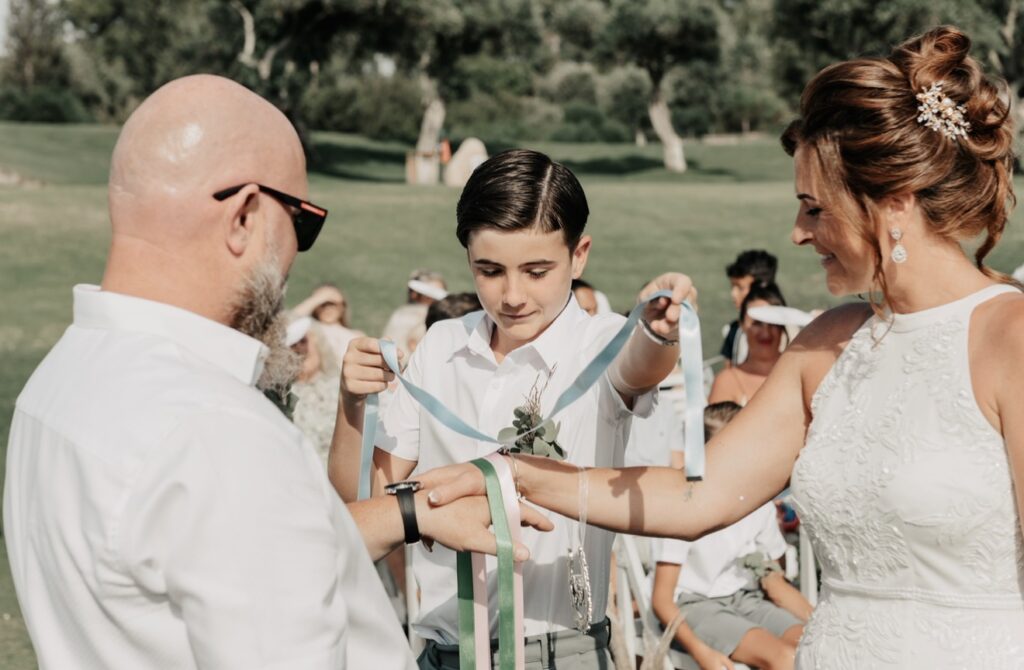
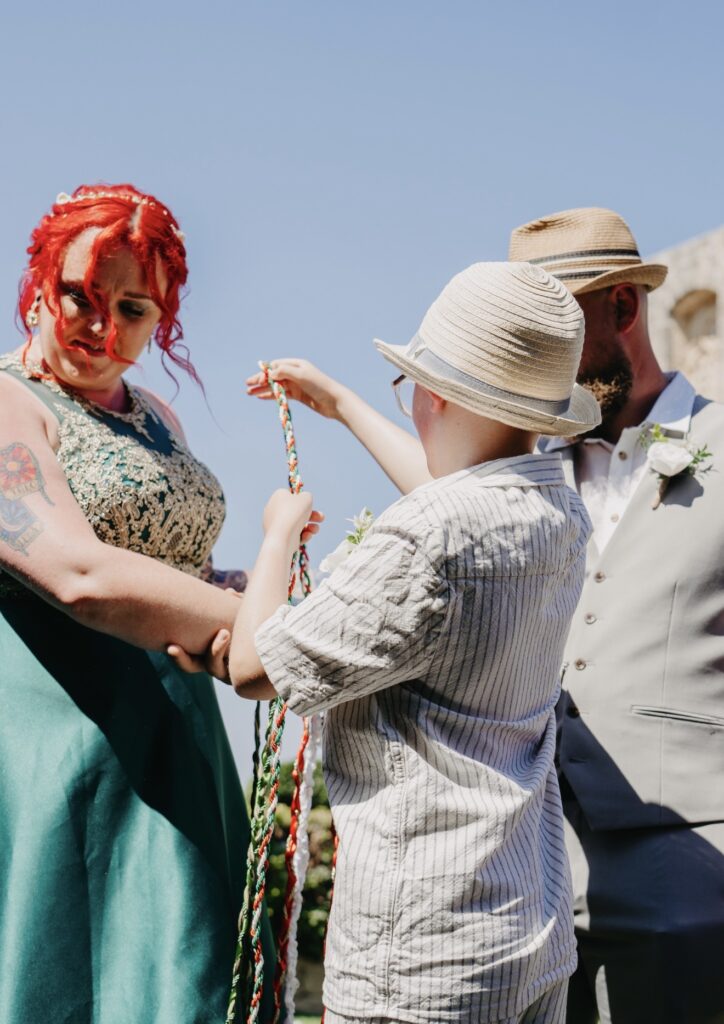
- bringing forward symbolic items for a handfasting, unity candle, sand ceremony, or time capsule
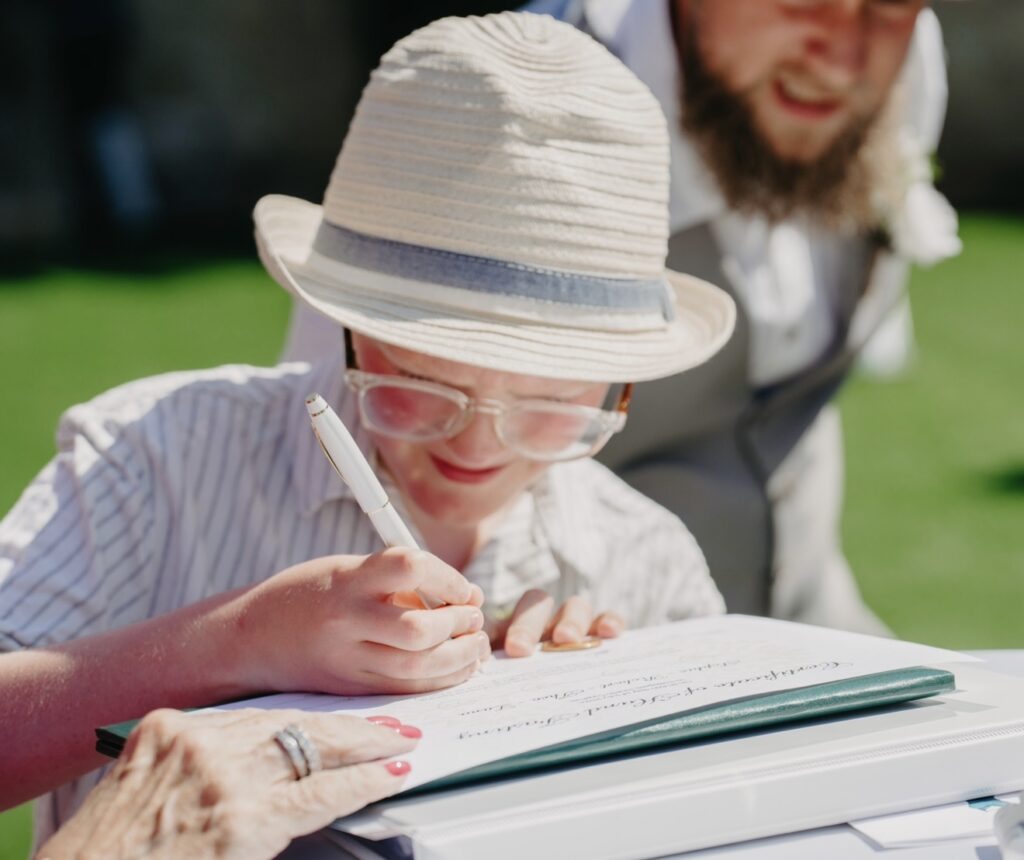
- signing a family certificate or adding a thumbprint, drawing, or message after the vows
A child does not need to be centre stage to be included. Sitting in a reserved front-row seat, wearing a small buttonhole or floral crown, or being invited to join you for a family photograph immediately after the ceremony can be just as special.
If you are blending families, avoid making assumptions about who should have the most prominent role. A gentle conversation with all involved can help you create a balance that feels fair, especially where children are different ages or have very different temperaments.
How to include children in wedding ceremonies with meaning
The ceremony is the natural place to acknowledge the children in your lives, but the wording should always be thoughtful. It should celebrate connection without placing an adult-level expectation on young shoulders.
A personalised ceremony might include a simple family promise. This is not about asking children to make formal vows or to promise instant happiness about every change ahead. Instead, it can acknowledge that you will continue to make time for one another, listen with kindness, and create a home where everyone belongs. Learn more about Rituals and Special elements here because they are a great way to involve children.
You may prefer a collective moment rather than individual words. For example, children can be invited forward for a brief family hug after you have exchanged vows, or they could add ribbons to a handfasting cord. A celebrant can guide these transitions calmly, explain what is happening to guests, and keep the pace comfortable for little ones.
Be mindful of language when family relationships are complex. Terms such as ‘bonus child’, ‘stepchild’ or ‘our family’ can be beautiful when the child welcomes them and used naturally by the family. When in doubt, use names and speak honestly about the bond you share rather than trying to define it too neatly.
Keep rehearsals short and expectations gentle
Children do better when they know roughly what will happen, but a lengthy, formal rehearsal is rarely necessary. Walk through their role once or twice in a relaxed way. Show them where they will stand, who they will walk with, and what they should do once they arrive.
Give clear instructions in child-friendly language. Rather than saying, ‘Please process at an appropriate pace’, try, ‘Walk slowly to Auntie Jane, then stand beside her until the music stops.’ If they are reading, print the words in a large, easy-to-read font and reassure them that it is perfectly acceptable to have an adult nearby.
Do not build the entire ceremony around a child completing one task perfectly. Have a quiet backup plan. An adult can carry the rings, a sibling can step in with the flowers, and a reading can be shared with a parent or the celebrant if nerves take over. Flexibility protects the child’s confidence and keeps the atmosphere joyful.
Plan for comfort as carefully as you plan for beauty
A wedding can be a very long day from a child’s point of view. Formal clothes may feel scratchy, a hot Cyprus ceremony may be tiring, and an evening reception can stretch beyond bedtime. Comfort is not a compromise on style. It is one of the kindest ways to ensure children remember the day fondly.
Choose breathable fabrics, comfortable shoes, and outfits that allow children to move and sit easily. Consider whether they need a cardigan, sun hat, spare clothes or a quiet space away from noise. For an outdoor ceremony, have water, shade, and a trusted adult close by.
Timing matters too. If young children are involved in the ceremony, keep their role near the beginning where possible. Once their special moment is done, they can sit with a parent, grandparent, or designated helper. A small activity bag, containing a quiet toy, colouring supplies, and a snack, can be invaluable during speeches or photographs.
At the reception, think beyond a children’s menu. A supervised activity table, early mealtime, garden games, or a separate calm corner can help families stay comfortable without separating children from the celebration. It depends on the ages present and the style of your day, but a little thoughtful planning permits parents to relax.
Give parents a clear plan
Parents should not have to chase information on the morning of the wedding. Let them know the arrival time, dress expectations, who is responsible for each child before and after the ceremony, and whether food or entertainment will be provided.
If a child has a key role, nominate one adult who is not part of the couple to be their point of contact. This could be a grandparent, aunt, uncle, or close family friend. They can offer reassurance, hold a hand during the entrance, and quietly step in if plans change.
It is wise to agree in advance that a child may opt out at the last minute. This is not a failure. The goal is for them to feel safe and celebrated, not to deliver a flawless performance for the guests.
Let the moments be imperfect
Children bring honesty to a wedding. They may giggle during the vows, drop a petal basket, pull a funny face in a photograph, or decide that the aisle is the perfect place to sit down. These are not disasters. More often, they become the stories everyone retells with affection.
The most memorable weddings make space for real family life, not just perfect timing. When children are welcomed with patience, warmth, and realistic expectations, their presence can deepen the ceremony in a way no carefully choreographed detail ever could.
If you would like them involved, choose one or two moments that genuinely reflect your relationship, prepare them gently, and then let them be children. Your wedding will feel all the more personal for it.

Quick Links
If you are considering planning a wedding or vow renewal ceremony, I’d love to hear from you. Learn more about me, contact me, and follow me on social media using the buttons below.